Yacht tender — how to choose, carry and launch a RIB tender
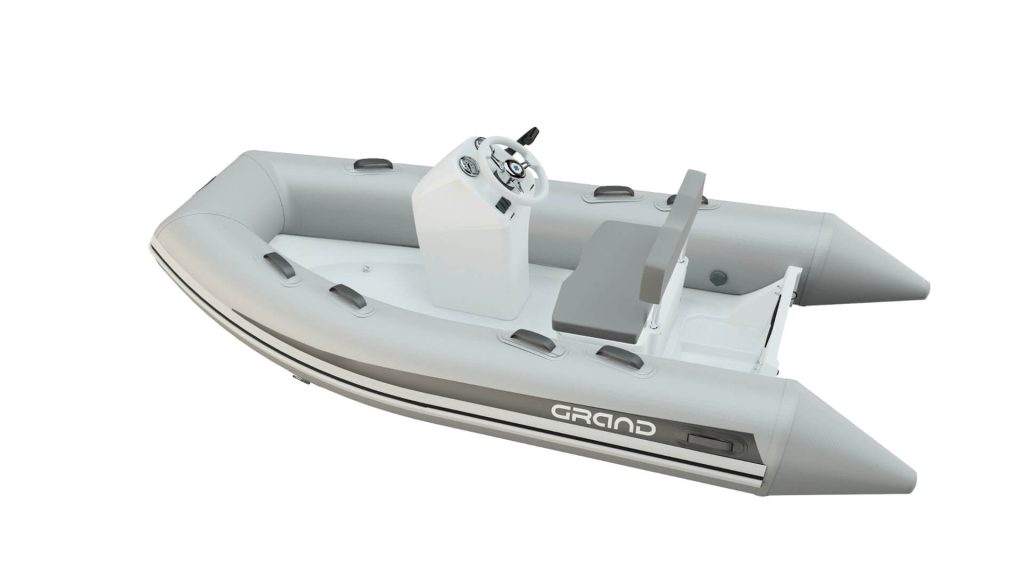
A tender is a small boat you carry on a yacht or tow behind it to get ashore when the yacht is at anchor or on a mooring buoy. What matters most in a tender is size and weight.
1. Measure the space on the yacht
Before choosing a model, check:
- the length and load capacity of the swim platform, tender garage or davits;
- the space on deck, if the tender is to be stowed on deck;
- whether the outboard stays on the tender during transport — then what counts is the weight of the boat with the outboard.
2. Choose the size
For yachts up to about 12 m, a 2.75–3 m tender with a 5–10 HP outboard is usually enough. Larger yachts carry 3.3–3.6 m models, which plane with several people on board with a 15–25 HP outboard. For example:
- S275 — 2.75 m, 53 kg, up to 3 people, from 12 400 zł;
- S300 — 3 m, 56 kg, up to 4 people, from 14 078 zł;
- S330 — 3.3 m, 63 kg, up to 4 people, from 15 165 zł;
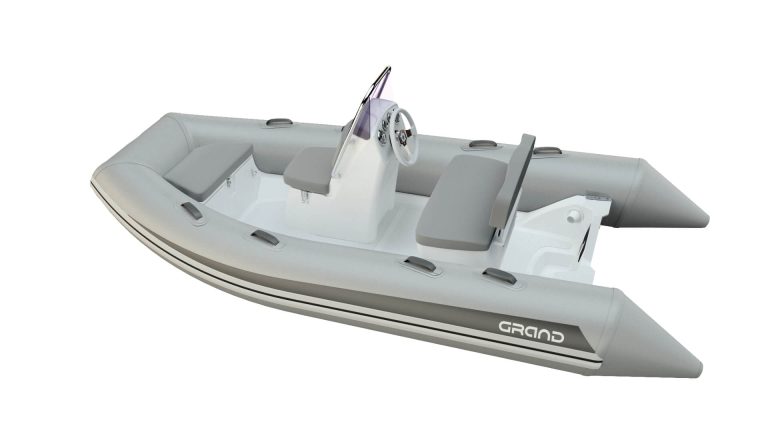
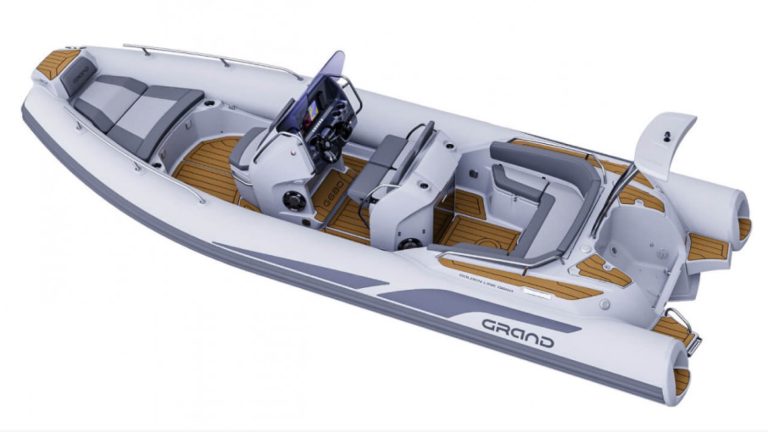
- G340 — 3.3 m, premium RIB with a console, from 37 100 zł.
You can compare all tenders on the Yacht tenders page.
3. Tiller or console?
A tiller tender is the lightest and simplest to use — the most common choice. A console adds comfort and a drier ride, but also weight. Choose it if the tender will also be used on its own, not just for trips ashore.
4. The tender’s outboard
An outboard up to 10 kW (9.9 HP) can be used in Poland without a licence and suits most tenders. For the smallest ones 2.5–6 HP is enough: the Yamaha 2.5 HP costs 4 100 zł, the 6 HP 6 900 zł. More in the guide Which outboard for a RIB.
5. How to carry the tender
- On the swim platform or in a tender garage — the most convenient; the tender is always at hand.
- On davits — the tender hangs over the water behind the stern; strap it down so it does not swing.
- On deck — on smaller yachts, usually with the outboard removed.
- In tow — only for short distances and on calm water; remove the outboard and loose gear.
6. Launching and getting back on board
- Before lowering, check the tube pressure and that the valves are closed.
- Fit the outboard to the tender once it is floating steadily alongside or at the platform.
- Always wear lifejackets — even for the short run ashore.
- After use in salt water, rinse the outboard and the tube with fresh water.
Frequently asked questions
How much does a tender weigh?
The smallest GRAND tenders weigh 53–63 kg without an outboard. You will find each model’s weight in its specifications.
Does a tender have to be registered?
No, if it is up to 7.5 m with an outboard up to 15 kW (about 20 HP).
Do I need a licence for a tender?
Not with an outboard up to 10 kW (about 13.6 HP).